
Can a payment institution distribute FX derivatives under its PSD licence?

The Court of Justice of the European Union addressed this question on 5 November 2026, in its preliminary ruling C-339/25. Thomas Derval and Rafaël Jafferali represented Iulicris Recycling SRL in the proceedings before the Court. Iulicris is a Romanian recycling company that invoices scrap metal in US dollars (USD) and makes payments in Romanian lei […]
From outsourcing to third-party risk: are you ready for the new EBA Guidelines?

1. Introduction On the 18th of September 2026, the European Banking Authority (“EBA”) published its final Guidelines on the sound management of third-party risk related to non-ICT services by financial institutions (the “Guidelines”). Once applicable, the Guidelines will repeal and replace the 2019 Guidelines on outsourcing arrangements. Their application date will be confirmed following their […]
Major legislative package and support for defence readiness adopted

The Council of the European Union adopted new legislative instruments and financial support to boost defence capabilities, industry and readiness on 9 October 2026. This follows the European Commission’s Readiness 2030 White Paper, published earlier this year, on which we previously reported. Context Several comprehensive (omnibus) legislative packages are making their way to bolster EU […]
Clarification of the concept of “dual-use items” by the Advocate General

In her Opinion of 24 September 2026 in case C-538/25 (Flugzeugherstellerin), Advocate General Ćapeta provided, for the first time, guidance on the interpretation of the notion of “dual-use items”. The Advocate General suggested a broad interpretation of that concept, concluding that the identification of an item as “dual-use” must be based on its objective capabilities. […]
Belgium’s New Capital Gains Tax: What It Means for Private Equity
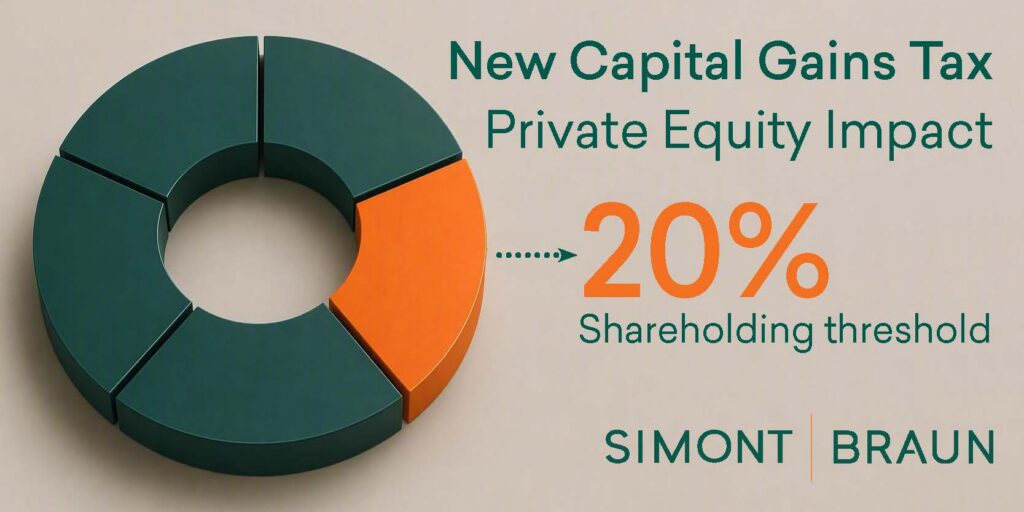
On 2 April 2026, the Belgian Parliament adopted a general capital gains tax (“CGT”) on financial assets, closing a debate that had run for over a year. The regime applies retroactively from 1 January 2026 and, on paper, targets individuals rather than companies. In practice, it reshapes how private equity deals are priced, structured and […]
A financial prosecutor’s office for Belgium

1. Introduction Belgian criminal enforcement increasingly targets the proceeds of crime. As reported in L’Echo on 20 May 2026, funds seized and transferred to the Central Office for Seizure and Confiscation reached EUR 148.3 million in 2025, a 34% increase compared to 2024. The Brussels prosecutor’s office aims to seize EUR 1 billion by 2030. […]
CONTRACT LAW REFORM | Book 7 of the Belgian Civil Code | Complete Series

On 16 July 2026, the Belgian Parliament adopted Book 7 of the Belgian Civil Code, introducing one of the most significant reforms of Belgian contract law in decades. The new framework will enter into force on 1 September 2027 and revises the legal regime governing a broad range of contractual relationships, including (consumer) sales, services, […]
Investor-appointed directors | Duties and risks

Investor-appointed directors are common in start-ups and private equity structures. While their appointment is typically intended to give investors greater oversight over their investment, a recent judgment of the Ghent Enterprise Court provides a useful reminder: once appointed as a director, one must act as a director and not merely as a representative of the […]
Private investigations in the workplace | Employers must prepare for the 16 December 2026 deadline

In March 2025, we reported on the new Belgian legal framework governing private investigations and its impact on employers conducting investigations involving their employees. The Private Investigation Act entered into force on 16 December 2024 and already imposes various requirements on employers conducting such investigations. These include obligations concerning, among other things, the collection of […]
Book 7 of the Belgian Civil Code | Settlement agreements
On 16 July 2026, the Belgian Parliament adopted Book 7 of the new Civil Code, introducing a comprehensive overhaul of several key contractual relationships. In our first article (read it here), we outlined the reform and its entry into force on 1 September 2027. Following a brief overview, this article examines the new rules on […]
Working Across Borders: How Belgium Allocates Tax and Social Security for Internationally Mobile Employees

Cross-border employment rarely fails on the headline question of where someone works. It fails on proof, on the gap between two separate legal regimes, and on the assumption that a single answer covers both. E.g. an employee working and residing in Belgium who spends part of the year working in the Netherlands faces two distinct […]
Belastingregeling voor auteursrechten | Fiscaal misbruik is niet uitgesloten

Zoals bekend kunnen inkomsten uit auteursrechten in aanmerking komen voor een gunstige fiscale regeling in de personenbelasting („PB”) doordat ze worden aangemerkt als roerende inkomsten en er een lager belastingtarief op wordt toegepast (artikelen 17, § 1, 5°, en 37 WIB 1992). Ter herinnering: sinds 1 januari 2023 (wet van 26 december 2022) zijn de […]